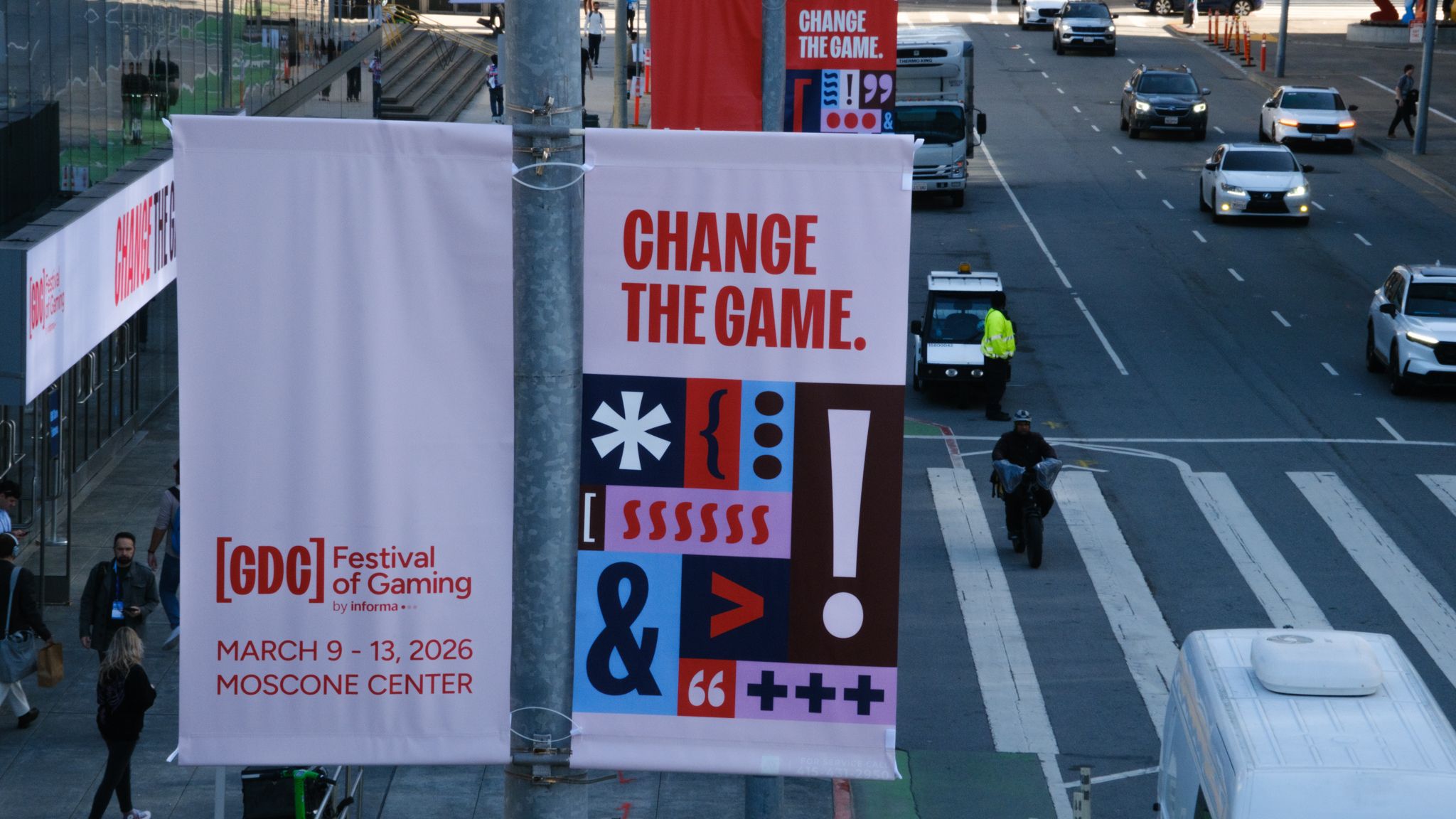
Not long ago, the annual Game Developers Conference in San Francisco was liberally sprinkled with ads for blockchain companies and sponsored talks about NFTs. They’ve all left.
Whereas GDC 2023 featured talks such as “So, You Want to Build a Blockchain Game” and “How Polygon Labs Is Optimizing Games for an Emerging Blockchain Future,” I can’t find a single session about that emerging blockchain future on the schedule for GDC 2026, which kicked off Monday and runs through Friday.
The closest thing I found is one talk whose description mentions “digital wallets and alternative payment methods preferred by players in emerging regions,” and I saw a single banner advertising a blockchain-related company in the convention center today, but that’s it.
Article continues below
Even all the way back at GDC 2017, there was a talk titled “Embracing Disruption: What Blockchains Mean for the Game Industry,” but there’s nothing like that this year. Disruption was not embraced, it seems.
Meanwhile, generative AI is well-represented at GDC 2026, with Nvidia and Google on the scene and talks coming up this week that include “Experimenting With AI-Powered Assistants in Games,” “AI Trends of Today and Opportunities For Tomorrow,” and “Build Living Games With AI.”
The expo floor, which a few years ago featured some big blockchain booths, will this year be populated by Tripo AI, Arcade AI, Blueberry AI, Gamercury AI, Moonlake AI, Tesana AI, and a number of AI companies that didn’t conveniently put “AI” in their names so that we’d know what they do.
There’s an inherent tension between big tech and creative workers here: According to a survey published by GDC itself earlier this year, the majority of GDC’s attendees are not on board with generative AI.
52% of the surveyed games industry professionals said that “generative AI is having a negative impact on the game industry,” while only 7% shared the opposite opinion, that generative AI is good for the industry.
“I’d rather quit the industry than use generative AI,” one UK-based game design supervisor commented.
At GDC 2026, I’ve already met with one generative AI-focused game developer that hopes to alter the conversation by demonstrating that large language models can be made subservient to authored storytelling in ways that players like. More on that to come.
While blockchain gaming has retreated from GDC, it hasn’t gone away. The hosts of the GDC 2023 talks I mentioned, NFT card game Splinterlands and blockchain company Polygon Labs, are still around.
There’s some mainstream support, too. Sony has a Web3 wing called Block Solutions Labs, which created the Soneium blockchain, and EVE Online developer CCP (not the prime example of “mainstream,” I admit) is experimenting with a blockchain-powered game called EVE Frontier.